




First-Time Paddler’s Guide: What to Expect on Your Muskoka River Adventure

For those seeking their first taste of paddling, few destinations rival the serene beauty and accessibility of Muskoka’s pristine waterways. From crystal-clear lakes reflecting towering pines to gentle rivers winding through cottage country, this stunning region of Ontario offers first-time paddlers the perfect introduction to one of Canada’s most beloved outdoor activities.
Whether you’re contemplating a peaceful canoe trip, an exhilarating kayak adventure, or the growing trend of stand-up paddleboarding, Muskoka provides ideal conditions for beginners while promising memories that will last a lifetime.
Why Muskoka is Perfect for First-Time Paddlers
Muskoka stands out as one of Ontario’s premier paddling destinations, offering an exceptional combination of natural beauty and beginner-friendly conditions. The region boasts over 1,600 lakes and countless rivers, providing endless options for exploration while maintaining the calm, protected waters that first-time paddlers need to build confidence.
The area’s geography creates ideal learning conditions. Muskoka’s lakes offer calm, flat water perfect for beginners, while the numerous sheltered bays and inlets provide safe spaces to practice basic techniques. Unlike more challenging whitewater destinations, most Muskoka waterways feature gentle currents and predictable conditions, making them perfect for those taking their first strokes.
What truly sets Muskoka apart is its accessibility. Located just two hours from the Greater Toronto Area, the region offers world-class paddling without requiring an expedition-level commitment. The warm water temperatures from June through September create an extended season perfect for comfortable paddling, while the stunning backdrop of mature mixed forests and rocky shorelines provides scenery that rivals any destination in North America.
Choosing Your Watercraft: Canoe, Kayak, or Stand-Up Paddleboard?
One of the first decisions you’ll face is selecting the right watercraft for your adventure. Each option offers distinct advantages for beginners, and understanding these differences will help you make the best choice for your first Muskoka experience. Check availability here!
Canoes: Stability and Capacity
Canoes excel in stability and storage capacity, making them ideal for families or groups wanting to share the experience. The elevated seating position provides excellent visibility of your surroundings, while the wide hull design offers excellent initial stability for nervous beginners. Canoes are particularly well-suited for longer adventures where you might want to bring picnic supplies, cameras, or fishing gear.
The single-blade paddle technique is intuitive for most people, though mastering efficient forward strokes and the essential J-stroke for maintaining direction requires some practice. For families with children or groups wanting to paddle together, a canoe’s capacity to safely carry multiple people makes it an excellent choice.
Kayaks: Control and Performance
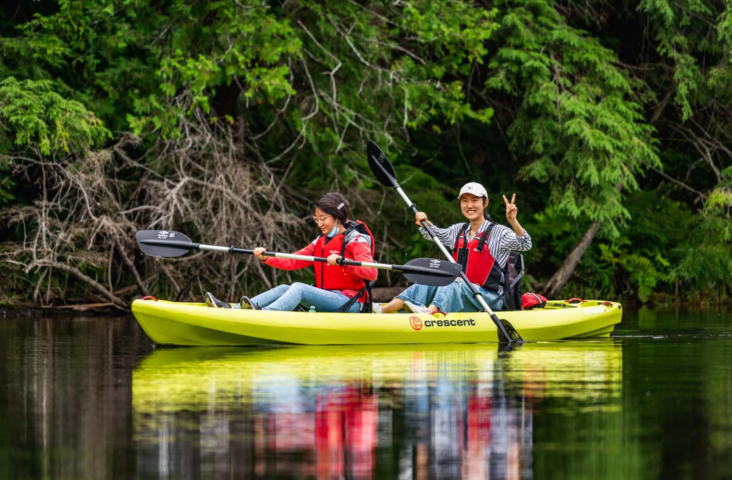
Kayaks offer superior control and maneuverability, especially in breezy conditions. The low seating position and double-bladed paddle provide better stability and more efficient forward motion than canoes. Sit-on-top kayaks are particularly beginner-friendly, offering easy entry and exit while eliminating concerns about wet exits.
For solo paddlers or those seeking better performance, kayaks are often the preferred choice. The enclosed cockpit design (in sit-inside models) keeps you drier, while the streamlined hull cuts through water more efficiently than broader canoe designs.
Stand-Up Paddleboards: Active Adventure
Stand-up paddleboarding (SUP) has gained tremendous popularity for its unique combination of full-body workout and meditative experience. Inflatable SUPs are particularly appealing for beginners due to their stability and forgiving nature if you fall. The standing position provides an unmatched perspective of the water and underwater features.
SUP is excellent for building core strength and balance, while the paddle stroke is relatively easy to learn. However, beginners should expect to spend time on their knees before standing confidently, and balance is key to enjoying the experience.
Essential Gear for Your First Adventure
Proper equipment can make the difference between a memorable adventure and an uncomfortable experience. While many outfitters provide basic gear, understanding what you need helps ensure you’re properly prepared.
Safety Equipment (Non-Negotiable)
A properly fitted Personal Flotation Device (PFD) is absolutely essential and legally required in most jurisdictions. Your PFD should fit snugly without restricting movement and should not lift over your ears when pulled. Even strong swimmers should always wear their PFD – 85% of fatal canoe accidents involve people not wearing life jackets.
A whistle attached to your PFD is crucial for emergency signaling. Three blasts indicate distress, while one blast is for attention. For longer trips or remote areas, consider carrying a waterproof phone case and VHF radio for additional communication options.
Clothing: Dress for Success
The golden rule of paddling clothing is to dress for the water temperature, not the air temperature. Cold water can be deadly, conducting heat away from your body 25 times faster than air. Avoid cotton clothing entirely – it absorbs water and stays wet, leading to rapid heat loss.
For warm summer conditions, choose:
- Quick-drying synthetic or merino wool base layers
- UV-protective rashguard or long-sleeve shirt
- Board shorts or quick-dry pants
- Water shoes or neoprene booties for foot protection
- Wide-brimmed hat with chin strap for sun protection
Layer strategically – paddling generates heat, but you’ll cool down quickly during breaks. Pack extra layers in a dry bag, including a fleece or insulating layer and rain jacket.
Additional Gear
A dry bag is essential for protecting valuables, snacks, and spare clothing. Bring plenty of water – paddling is more dehydrating than many realize. Sunscreen (SPF 30+) and sunglasses with retainer straps are crucial, as water reflects UV rays intensely.
For longer adventures, pack energy-rich snacks and consider bringing a basic first-aid kit. A waterproof camera lets you capture memories without worry.
Basic Paddling Techniques Every Beginner Should Know
While paddling may look simple, proper technique makes the experience more enjoyable and less tiring. Understanding basic strokes before you hit the water will help you feel confident and in control.
Proper Paddle Grip and Posture
Hold your paddle with hands slightly wider than shoulder-width apart. Your grip should be relaxed but secure, allowing the paddle to rotate slightly between your palms. Maintain upright posture with your core engaged – paddling is a full-body activity, not just an arm workout.
For kayaking, ensure your paddle blades are positioned correctly with the concave (scooped) side facing you. The longer edge should be at the top, and blades should be parallel for beginners.
The Forward Stroke: Your Foundation
The forward stroke is composed of three phases: catch, power, and recovery. During the catch phase, reach forward and immerse the blade fully near your feet. The power phase involves rotating your torso while pulling the blade alongside your craft. Recovery means lifting the blade out when it reaches your hip and preparing for the next stroke.
The key to efficient paddling is using your torso rotation, not just your arms. Think of your arms as connecting your torso to the paddle – the power comes from rotating your core.
Turning and Maneuvering
The sweep stroke is essential for turning. Reach out from your craft and pull the paddle in a wide arc from bow to stern. For kayakers, this creates a “C” shape in the water. Draw strokes move your craft sideways. Reach out perpendicular to your craft and pull the water toward you. This technique is invaluable for approaching docks or moving away from obstacles.
What to Expect on Muskoka’s Waters
Launching Your Adventure
Most Muskoka launch points are well-maintained and accessible, with many featuring gradual slopes perfect for beginners. Arrive early to allow time for orientation and practice. Popular locations like Huntsville’s Algonquin Outfitters offer waterfront launches with immediate access to the Muskoka River.
Take time to practice basic strokes near shore before venturing out. This builds confidence and lets you get comfortable with your equipment in a safe environment. Check out our summer self guided kayak, canoe & paddle board adventure tours here!
The Muskoka Experience
Muskoka’s waters offer stunning variety. The Big East River provides gentle, scenic paddling through some of the region’s most beautiful landscapes. Lake Rosseau and Lake Joseph offer larger water experiences with opportunities to explore secluded bays and visit waterfront communities.
Most routes suitable for beginners offer calm conditions with gentle currents. The Muskoka River through Huntsville provides an excellent introduction, with easy access to amenities and beautiful scenery.
Wildlife Encounters
Muskoka is home to incredible wildlife diversity. You may encounter loons, great blue herons, and ospreys on the water. White-tailed deer often visit shorelines for water, while the lucky paddler might spot a moose in wetland areas.
The region hosts over 250 bird species and nearly 50 mammalian species. Beavers are common, and their dams and lodges provide fascinating glimpses into their engineering skills. Always maintain respectful distance from wildlife and never attempt to feed or approach animals.
Weather and Seasonal Considerations
Timing your first paddling adventure can significantly impact your experience. Many experienced paddlers consider September ideal, offering warm water, pleasant weather, and fewer crowds. The prime season runs from June through September, when water temperatures are most comfortable.
Summer offers the warmest conditions but also the busiest waterways. Early morning or weekday trips provide more solitude and often calmer conditions. Spring and fall require more careful attention to weather and appropriate clothing, but offer spectacular scenery and excellent wildlife viewing opportunities.
Always check weather forecasts before departing. Wind can create challenging conditions for beginners, especially on larger lakes. Start with protected waters and gradually build confidence before tackling more exposed areas.
Working with Local Outfitters
Muskoka is home to excellent outfitters who specialize in helping first-time paddlers. LIV OUTSIDE in Bracebridge offers comprehensive rental services and guided tours from their waterfront location on the Muskoka River. Their expert staff can match you with appropriate equipment and provide valuable local knowledge.
Algonquin Outfitters locations in Huntsville and Bracebridge provide extensive gear selection and rental services. Their waterfront Huntsville location offers immediate river access and three floors of outdoor equipment.
Professional outfitters provide properly maintained, safety-inspected equipment along with basic instruction. They understand local conditions and can recommend routes appropriate for your skill level and weather conditions.
Safety and Best Practices
Paddling safety begins with proper planning and equipment. Never paddle alone as a beginner – having experienced paddlers or guides significantly increases safety. Inform someone of your planned route and expected return time.
Understand your limitations and stick to them. If conditions deteriorate or you feel uncomfortable, return to shore immediately. Most paddling accidents involve poor decision-making rather than equipment failure.
Stay hydrated and protected from the sun. The combination of reflection off water and extended exposure can lead to severe sunburn even on cloudy days. Take regular breaks and monitor your energy levels – fatigue leads to poor decisions and accidents.
Making the Most of Your Experience
Your first Muskoka paddling adventure should focus on enjoyment rather than distance or speed. Take time to appreciate the scenery, listen to the sounds of nature, and simply enjoy being on the water. Bring a waterproof camera to capture memories of this special experience.
Consider combining paddling with other activities – many routes offer opportunities for swimming, wildlife viewing, or exploring historic sites. Pack a picnic and plan stops at scenic locations or beaches along your route. Most importantly, don’t rush the experience. Muskoka’s beauty is best appreciated at a leisurely pace, allowing you to truly connect with this remarkable landscape that has been drawing visitors for over a century.
Your first paddling adventure in Muskoka will likely be the beginning of a lifelong passion. The region’s combination of accessibility, natural beauty, and excellent infrastructure makes it the perfect place to discover why millions of Canadians consider paddling an essential part of experiencing the outdoors. With proper preparation, appropriate gear, and respect for the environment, your Muskoka river adventure will create memories to last a lifetime.
For Kayak, SUPs/Paddleboards or Canoe rentals, guided tours, and expert advice, visit LIV OUTSIDE in the heart of Muskoka, where experienced staff can help make your first paddling adventure everything you’ve imagined and more.
Book Your Ice Climbing Adventure

Contact Info
- 271-1 Ecclestone Drive, Bracebridge, ON
- 1 705 646 0492
- 1 866 646 0492
- [email protected]